
Case study
From Slide Deck to Course: Handling Customer Complaints
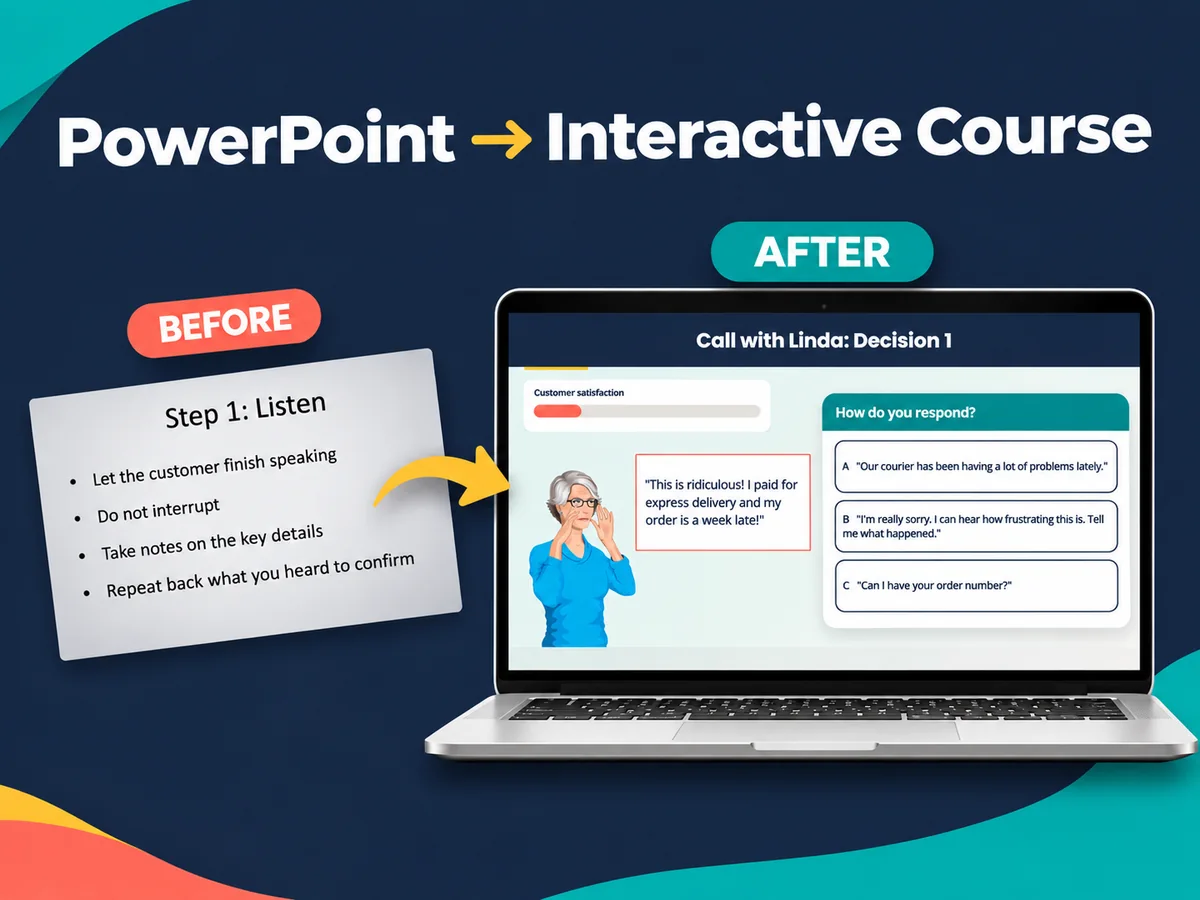
A plain PowerPoint on handling complaints had the right content and no way to practise it. I redesigned it and rebuilt it in Articulate Storyline as a short course where learners use the method on a frustrated customer before they meet a real one.
The challenge
The original deck covered the right ground: why complaints matter, and a four-step method for handling them, each step set out as a slide of bullet points. “Let the customer finish speaking. Do not interrupt.”
Read on a slide, that advice sounds obvious. The hard part is doing it with an angry customer on the line who is demanding an answer. A deck can tell people what good looks like. It cannot give them a chance to try it, get it wrong and see what happens.
My analysis
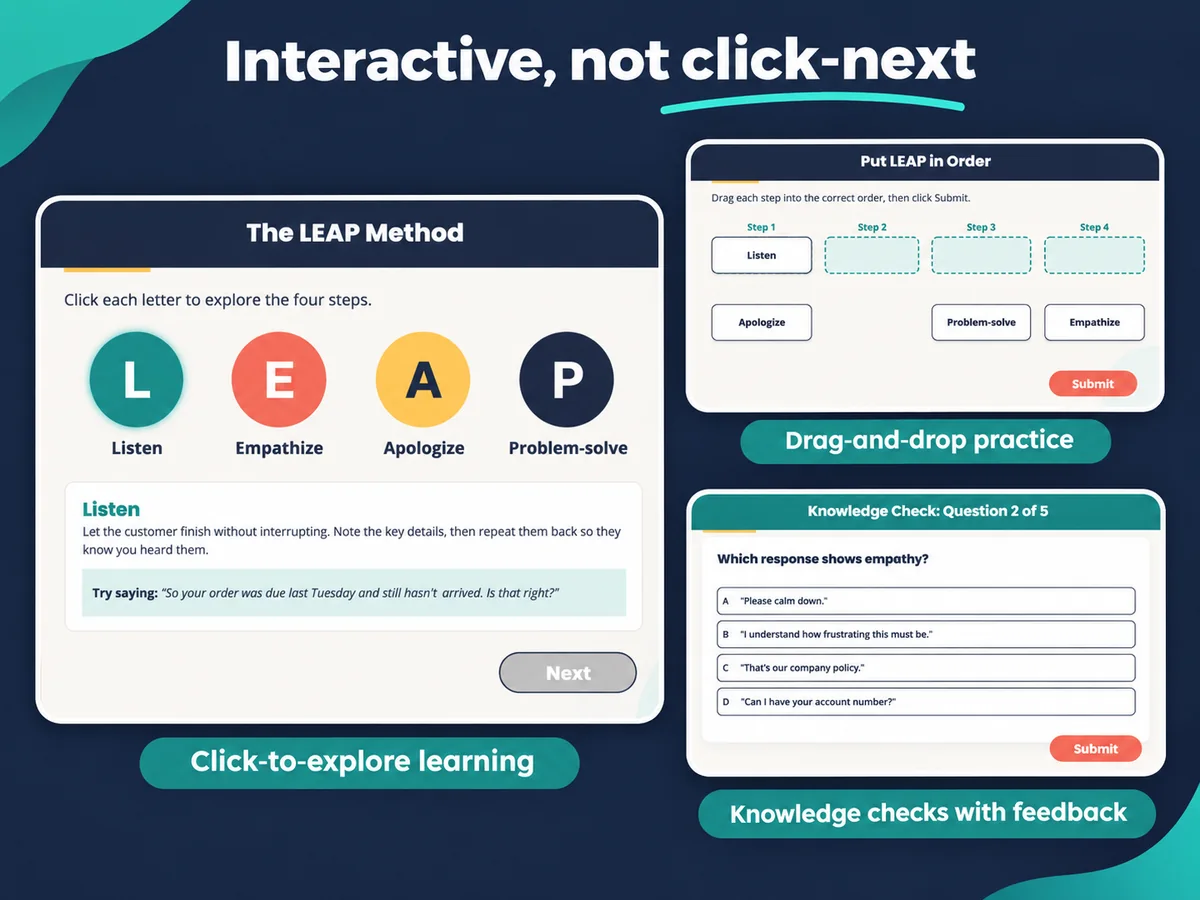
I kept the content and changed what the learner does with it. Each part of the deck became a different kind of activity, ordered so that every step prepares for the next: understand why it matters, explore the method, put it in order, then use it.
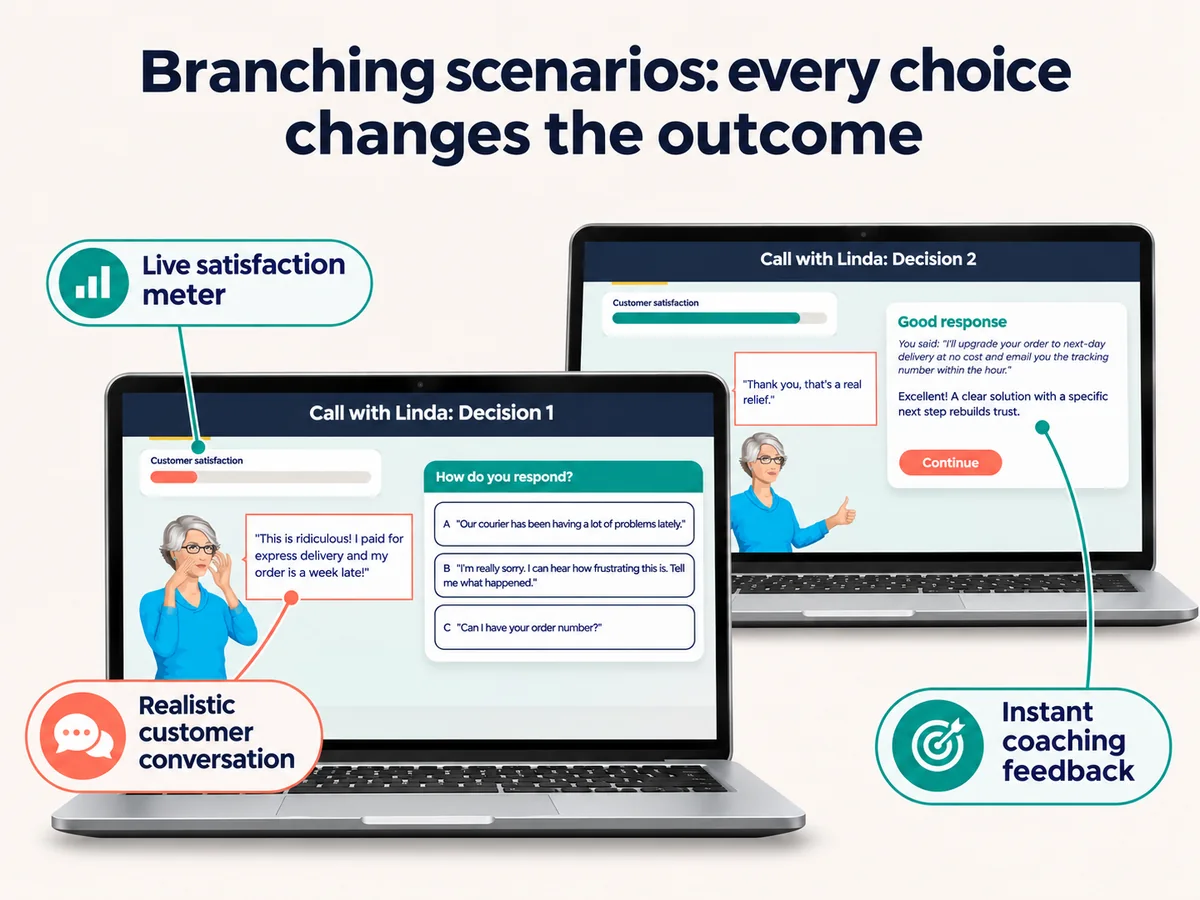
The heart of the course is a customer call. Linda’s express-delivery birthday gift is a week late, and the learner has to decide what to say. A satisfaction meter rises or falls with each choice, so the consequence of a cold or defensive answer is visible straight away rather than explained afterwards.
Knowing the four steps isn’t the skill. Using them on an angry customer is.
The solution
Short click-to-explore screens introduce why complaints matter and the LEAP method — Listen, Empathize, Apologize, Problem-solve — each with a line the learner could actually say. A drag-and-drop activity then has them put the steps in order, with feedback on why the order matters.
In the branching call, every decision has a strong option and weaker ones that sound plausible: jumping straight to the order number, blaming the courier, making a vague promise. Each gets specific coaching feedback. A five-question knowledge check closes the course.
Conclusion
Nothing in the original deck was wrong. It just stopped at telling. The same approach works for any slide deck an organisation already has: keep the expertise that went into it, and give learners somewhere to practise it.
Ready to turn complex content into practical learning?
Let’s discuss your audience, performance need, and the right format for the project.